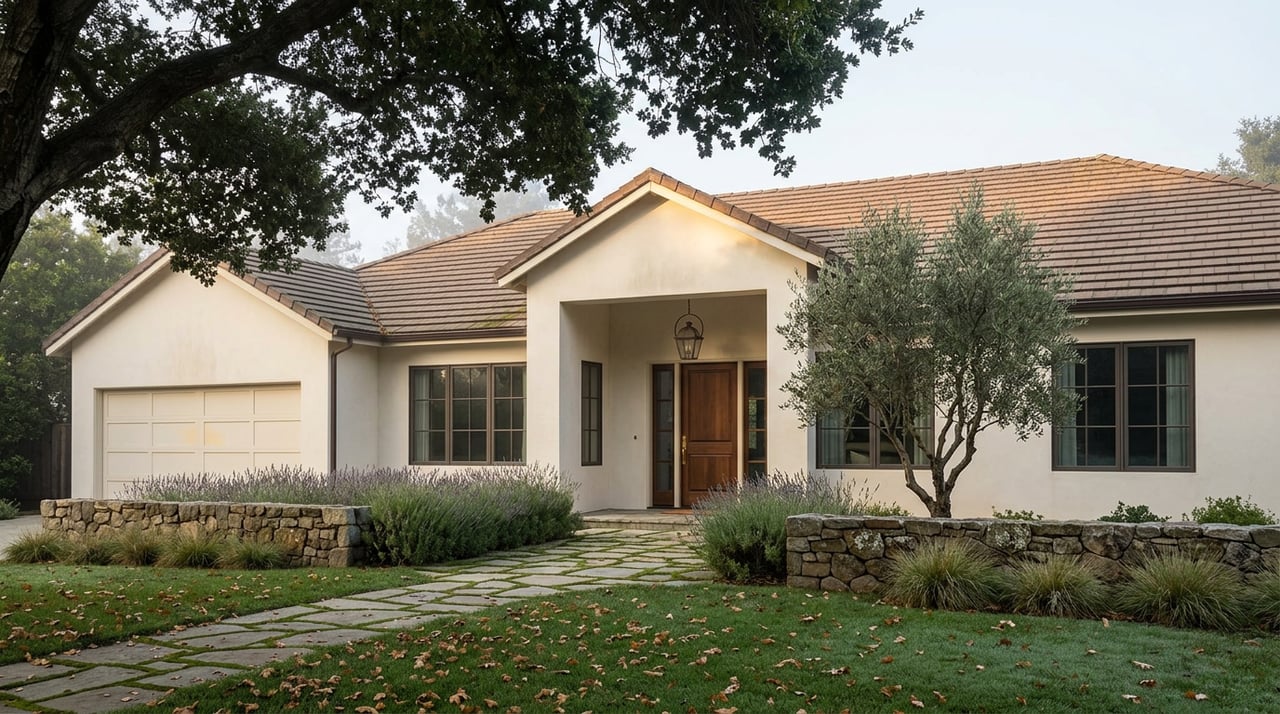
Anderson Reservoir Is Still Empty. This Is the Year the Six-Year Wait Around It Finally Started Moving.
September 10, 2026
September 10, 2026
If you've walked, biked, or run the Coyote Creek Parkway any time in the last six years, you already know the drill. You park off Malaguerra Avenue, pay the six-dollar day fee, and head out onto a wide paved trail that looks out over a lake that isn't there. Anderson Reservoir, Santa Clara County's largest, has been sitting at roughly 3 percent of capacity since Valley Water began draining it in the fall of 2020. The trail never closed. The lake just never came back.
That contrast has become part of the texture of living here. But this fall is different from the five that came before it, and if you've noticed more trucks off Cochrane Road or new activity down in the creek channel, there's a real reason for it. The long wait for Anderson Reservoir is still years from over. It just stopped being invisible.
The numbers on what's actually missing are worth sitting with for a second. Anderson Reservoir holds up to 89,073 acre-feet of water when full, and it's so large that all nine of Valley Water's other reservoirs could fit inside it. Right now it's sitting at a fraction of that, drained under a 2020 federal order tied to earthquake safety concerns about the dam itself.
What didn't drain was the Coyote Creek Parkway, the roughly 15-mile paved multi-use trail that connects Anderson Lake County Park to Hellyer County Park to the north. That path, along with the historic Jackson Ranch site, Rosendin Pond, and the park's picnic areas, has stayed open through the entire drawdown. The lake left. The 4,275-acre park around it didn't go anywhere, and the runners, cyclists, and dog walkers who use it daily kept using it, water or no water.
That's the part of this story most people already understand. The part that's new this year is what's happening at the dam itself, and it's the reason a walk out there in September looks and sounds different than it did in April.
For most of the drawdown, "the dam project" was something residents heard about in the abstract, a future date on a government timeline that kept sliding. That stopped being abstract on July 24, 2026, when Valley Water's Board of Directors awarded a $1.88 billion construction contract to the Flatiron Dragados Sukut ADSRP Joint Venture to rebuild most of the dam and spillway. Total project cost, including everything that's led up to this point, runs closer to $2.8 billion.
Then, in late August, the joint venture's parent company announced crews had begun mobilizing on site under a notice to proceed from the district. That's a meaningful shift. A contract award is a decision on paper. A notice to proceed is when equipment and people actually start showing up.
None of this means the main rebuild is underway yet. That phase, the actual reconstruction of the dam embankment, spillway, and outlet pipes, is still set to begin in early 2027 and will take about seven years once it does. What's happening right now is the run-up to that, and it's visible enough that it's worth knowing what you're looking at.
There are two active construction efforts near the park this fall that explain most of what residents are seeing and hearing, and neither one is the seven-year rebuild everyone's been waiting on.
The first is the Anderson Dam Tunnel Project, a 1,700-foot tunnel bored through the hillside beside the dam that will replace the existing 4-foot-diameter outlet pipe with a new 13-foot outlet. It's been under construction since 2021 and is now in its final stages, expected to be finished later this year. Once it's functional, Valley Water says it could be used this winter if the region sees significant storms, since it lets the district release far more water in an emergency than the old pipe ever could.
The second is the Live Oak Restoration Reach Project, a habitat effort along roughly 2,600 feet of Coyote Creek that adds gravel and installed wood structures to improve spawning conditions for native steelhead trout. Construction on that piece runs from June through December 2026, working in and near the creek channel itself, which means more equipment and hauling traffic than the parkway has seen in a while.
| Project | What's happening this fall | Expected timing |
|---|---|---|
| Anderson Dam Tunnel Project | Final construction stages, functional testing ahead | Complete later in 2026 |
| Live Oak Restoration Reach Project | Active in-creek habitat construction | Runs through December 2026 |
| Anderson Dam Seismic Retrofit (main rebuild) | Contract awarded, crews mobilizing on site | Begins early 2027, seven-year build |
Both of the near-term projects mean an increase in truck traffic on roadways feeding the construction site off Cochrane Road, and Valley Water has said it's working to redirect lighting and minimize noise for nearby residents during active hours. Neither closes the parkway trail.
The reservoir itself, including any access for boating or fishing, remains closed to the public during construction, and that's been true since the initial drawdown began. What hasn't changed:
If your routine out there has been the same loop for six years, this fall doesn't change your route. It changes what you'll hear and see from it, and gives the empty lake you've been walking past an actual explanation instead of just a long silence.
Earlier county materials floated 2032 as a completion year for the dam work, but that was before this summer's contract award reset the schedule. The number that matters now is the one Valley Water itself is using: seven years of construction starting in early 2027, which points to completion somewhere in the early 2030s before the reservoir can return to full operating capacity.
That's a long way off. But the six years since the drawdown began have taught this community that "the project" can feel like background noise right up until it isn't. This is the first fall where the noise is real, the trucks are actually on Cochrane Road, and the tunnel that's been under construction since 2021 is finally close to functional. The lake is still empty. The wait around it just got a lot more concrete.
If you're already out on that trail most weekends, none of this changes your plans. It just means the next time someone asks what's going on with the lake, you'll have an actual answer.
For more on what's happening around Morgan Hill and the South County communities nearby, Amy Martinez keeps a close eye on the details that shape daily life here, not just the ones that show up in a listing. Let's Connect if there's ever a question about the neighborhood worth asking.
Stay up to date on the latest real estate trends.

Every step—from pricing to negotiation—is handled with intention and strategy, designed to maximize outcomes and align with each client’s goals.