The San Martin Acre That Comes With Someone Else's Contract
August 27, 2026
August 27, 2026
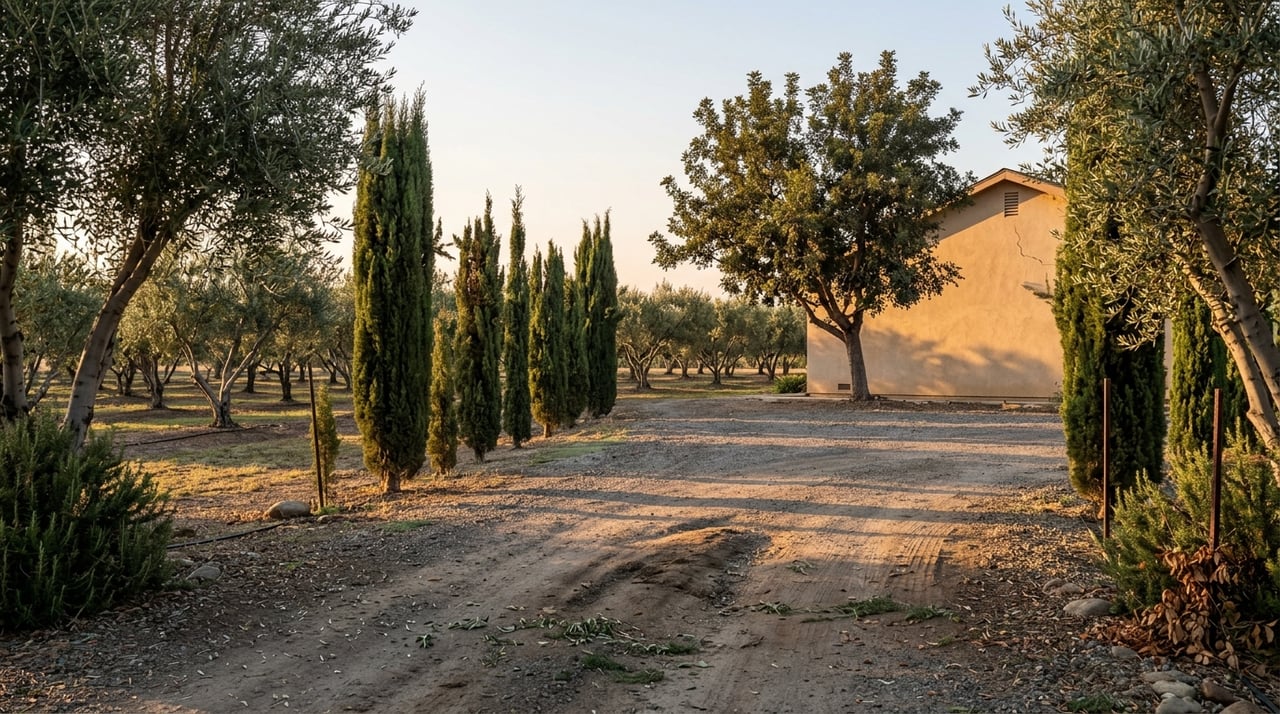
A ten-acre parcel in San Martin can look like the best math you've seen all year. Divide the price by the acreage and it beats anything comparable in Morgan Hill or Gilroy by a wide margin. Before you get attached to that number, ask one question nobody puts in the listing description: is this land still farming for the county, whether or not anyone plants a thing on it?
San Martin is unincorporated, which means it sits under Santa Clara County's jurisdiction rather than a city's, and that single fact opens the door to something Morgan Hill and Gilroy buyers never have to think about. A meaningful share of the county's unincorporated land, more than 362,000 acres, about 43 percent of the county's total land area, is tied up in Williamson Act contracts that trade a lower property tax bill for a legal promise to keep the land in agricultural use. Those contracts attach to the parcel, not the owner, and they don't dissolve at closing. Whoever buys the land inherits the paperwork.
The California Land Conservation Act of 1965, known locally as the Williamson Act, lets a landowner sign a contract with the county restricting their property to farming, ranching, or a short list of compatible uses. In exchange, the county assesses the land at its agricultural income value instead of its market value, which on prime South County dirt can be a very different number. The contract renews itself automatically every January 1 unless someone files a notice to stop it.
That renewal detail is where a lot of buyers get surprised. It's not a lease you can simply decline to extend. If you want out, you file a notice of non-renewal with the Clerk of the Board by October 1, and even then the contract doesn't end. It winds down over nine more years, with property taxes rising in steps each year until the land finally reaches full market assessment. Miss that October 1 window and the whole process pushes out an extra full year before it even starts. There's also an annual Agricultural Preserve Questionnaire due every April 10 to prove the land is still being farmed, and skipping it can trigger a county investigation or a non-renewal the owner didn't ask for.
None of this means the land is unbuildable forever. It means the timeline on your dream house is tied to a calendar you don't control, one that started ticking possibly decades before you made an offer.
San Martin isn't a footnote in this story. It's one of the places the county points to when explaining why the program needed cleaning up.
In 1975, a Williamson Act contract known as Contract 75.004 was signed by a local landowner, restricting the land to agricultural use. Not long after, a group of Morgan Hill developers purchased the land and, over the following decades, the parcels changed hands more than 120 times while agriculture gradually disappeared from what's now known as the San Martin Estates subdivision. A similar pattern played out under Contract 68.084, covering what became Golden Heights Estates. Both subdivisions were eventually flagged in the county's own review as parcels that had been developed on Williamson-contracted land in ways the law never intended, and both were targeted in the first phase of a county-led effort to strip Williamson status from substandard parcels, meaning lots too small to meet the program's actual acreage minimums of roughly 10 acres for prime farmland or 40 for non-prime.
"Preserving our productive agricultural lands not only benefits our local agricultural economy, but also protects San Martin's unique, rural character," Santa Clara County Supervisor Sylvia Arenas said of a 2024 land purchase in the area.
That quote comes from a different, more recent chapter. In 2024, the Santa Clara Valley Open Space Authority bought a 79-acre Agricultural Conservation Easement on land off Monterey Highway in San Martin, ground that had been farmed for more than 55 years and was, in the Authority's own words, initially anticipated to become a residential subdivision. The Authority's real property coordinator at the time called the area high risk for development. Whatever protected that land from becoming another San Martin Estates was a deliberate, funded intervention, not an accident of zoning.
So San Martin carries two different histories layered on top of each other. Older subdivisions where the agricultural intent quietly evaporated and the county eventually pulled the tax status. And larger, still-working parcels the county and regional conservation groups are actively working to keep intact. A buyer touring acreage today could be looking at either one, and the listing sheet won't tell you which.
Here's what actually happens to a parcel depending on which path its Williamson Act status takes:
| Path | What happens | Timeline |
|---|---|---|
| Contract stays active | Land remains restricted to agricultural and compatible uses, taxed at agricultural value | Renews automatically every January 1, indefinitely |
| Non-renewal filed | Owner notifies the Clerk of the Board to stop the auto-renewal | Must file by October 1 to start the next year; then nine years of gradually rising taxes before full market assessment |
| Cancellation | Owner petitions the county to end the contract early | Requires Board of Supervisors approval and a cancellation fee, and isn't treated as routine |
Notice what's missing from that table: a fast option. There isn't one. If a ten-acre parcel you're considering is under an active contract and you want to build something the contract doesn't allow, you're not negotiating a waiver at the closing table. You're starting a clock that a previous owner may have already been running, or one you'd be starting fresh.
Because Williamson Act contracts only exist on unincorporated county land, they are, by definition, a San Martin issue and not a Morgan Hill or Gilroy one once you're inside those cities' limits. That's worth sitting with if you're cross-shopping the three. A homesite in Morgan Hill's city limits and a similarly priced parcel in San Martin can look like interchangeable options on a spreadsheet, but only one of them comes with a possible decades-old agricultural contract attached to the deed.
It also reframes what San Martin's price tag is actually measuring. The median sale price across San Martin reached roughly $1.69 million as of May 2026, down about 5 percent from the year before, and the housing stock there genuinely isn't organized into subdivisions the way its neighbors are. Private driveways lead to ranch-style houses, custom builds, and compact cottages sitting on acreage rather than tract lots. Some of that premium reflects space and privacy. Some of it, on the right parcel, reflects land that's still earning its keep as a working property under a contract with the county, which affects both what you'll pay in taxes and what you're legally allowed to do with the dirt.
A title company or the county's own planning department can answer most of these before you're locked into a contract of your own.
Does every large parcel in San Martin have a Williamson Act contract? No. Plenty of San Martin acreage has never been under one, and some historic contracts, including the ones tied to San Martin Estates and Golden Heights Estates, were already stripped by the county decades ago. The point isn't that every parcel is encumbered. It's that you can't tell from the listing photos, and the answer changes what the land is worth to you.
If I buy encumbered land, can I just farm it a little to stay compliant? The contract requires commercial agricultural production, not a hobby garden, and the county's annual questionnaire is the primary way it checks. A backyard orchard for personal use generally won't satisfy the requirement on its own.
Does this affect financing? It can. Lenders and appraisers need to understand what the land is legally restricted to before they can value what you're allowed to build. Loop in your lender early if a parcel you're considering carries an active contract.
Land in San Martin rewards people who ask the second question, not just the first one. If you're weighing an acreage purchase here against something in Morgan Hill or Gilroy, I'd rather walk the parcel history with you before you fall for the price per acre. Amy Martinez works this exact stretch of South County every week. Let's Connect.
Stay up to date on the latest real estate trends.



Every step—from pricing to negotiation—is handled with intention and strategy, designed to maximize outcomes and align with each client’s goals.